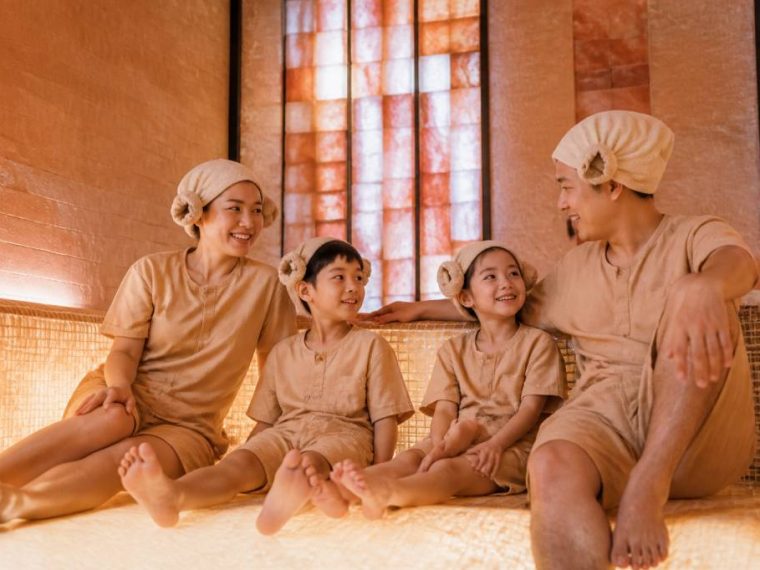
There is something wonderfully grounding about a Korean bath house. In a world of hurried breakfasts, snack negotiations and the mysterious disappearance of everyone’s left sock, a few hours spent soaking, resting and sharing quiet family time can feel like a small act of magic.
In Korea, traditional bath houses are known as jjimjilbangs (찜질방). They are more than places to wash. Families visit them to bathe, warm up in heated rooms, relax, eat simple food and enjoy an unhurried pause together. Some are modest neighbourhood establishments, while others are large wellness centres open throughout the night.
For families travelling in Korea, a jjimjilbang can be an affordable and memorable cultural experience. It is also one that benefits from a little preparation. The rules may feel unfamiliar at first, especially when it comes to changing areas, bathing separately by gender and leaving your swimsuit in the locker. But once the first few minutes are behind you, the atmosphere is often calm, welcoming and surprisingly easy to navigate.
What is a Korean bath house?
A traditional Korean bath house usually has two connected areas. The first is the wet bathing area, where men and women bathe separately. Here you will find showers, hot pools, cold pools, steam rooms and often rows of small stools for washing.
The second area is the communal jjimjilbang space. This is generally mixed-gender and family-friendly, with heated rooms, lounging areas, floor mats, televisions, cafés and sometimes play zones or sleeping rooms. Visitors wear a matching cotton outfit provided by the bath house, usually a T-shirt and shorts.
The bathing area is similar to a public spa, but the experience is less about rushing through a shower and more about taking time. People wash carefully before entering the pools, soak quietly and move between warm and cool water. In the communal space, families may rest side by side, drink barley tea or share a boiled egg wrapped in paper. It is everyday Korean life, with a little extra steam.
Is a jjimjilbang suitable for children?
Many are, although suitability depends on the individual bath house. Large facilities in cities such as Seoul, Busan and Incheon often have family areas, children’s play spaces and plenty of room for prams or bags. Smaller neighbourhood bath houses may be quieter and more traditional, with fewer child-focused facilities.
Before visiting, check the bath house’s website or ask your accommodation to call ahead. Look for information about:
- minimum age requirements;
- children’s access to the sauna and heated rooms;
- rules for children entering the gender-separated bathing areas;
- family rooms or private bathing options;
- opening hours and overnight access;
- whether towels, toiletries and children’s clothing are provided.
Age rules can vary. Some establishments allow young children to enter the changing and bathing area with a parent of the opposite sex, while others may have a specific age limit. Older children are generally expected to use the changing area that matches their gender. This is an important detail to check before you arrive, particularly if you are travelling with a child who is no longer very small.
For babies, a jjimjilbang may be more challenging than a hotel bath or private spa room. The heat can be intense, noise levels vary and babies should never be placed in hot pools, saunas or heated rooms. A private family bathing facility may offer a gentler introduction, while a baby carrier can make moving around easier in communal areas where prams are not practical.
What should families expect when they arrive?
At reception, you will usually pay an entrance fee and receive a locker key or wristband. Some bath houses use electronic wristbands to record purchases, so you may be able to pay for snacks, drinks or treatments without carrying money around.
You will normally remove your shoes before entering the changing area. Your shoes go into a small locker, while larger belongings are placed in another locker inside. Keep your key with you, often around your wrist or ankle. If you are travelling with children, it is worth taking a moment to explain that the key is not a toy, however tempting it may look when everyone is waiting for a locker to open.
After changing, follow the signs to the bathing area. Men’s and women’s facilities are clearly marked, though English signage is more common in larger city locations. In the bathing area, you will leave your clothes in the locker and take only the essentials with you.
Yes, this means bathing without a swimsuit. For many visitors, this is the part that requires the greatest mental adjustment. Korean bath houses are practical spaces, and nudity is treated matter-of-factly rather than dramatically. Everyone is there for the same reason: to wash, soak and relax. A warm smile, a little confidence and the knowledge that nobody is paying nearly as much attention to you as you imagine can carry you through.
Simple jjimjilbang etiquette
The most important rule is to wash thoroughly before entering any pool. Sit on the small stool, use the shower and shampoo provided, and rinse away all soap before soaking. If your child is old enough, make this part of the adventure: “First we make ourselves sparkly clean, then we can choose the warm pool.” It sounds more appealing than a lecture about public hygiene.
- Shower before entering the pools.
- Keep towels out of the water.
- Do not run, splash or shout in the bathing area.
- Keep long hair tied up.
- Respect quiet areas and other people’s space.
- Drink water regularly, especially after using heated rooms.
- Follow staff instructions about children and pool temperatures.
Small towels are often provided, but they are usually intended for modesty, drying your face or wiping away perspiration rather than wrapping around your whole body. Bring a spare if you prefer, although do check the bath house’s own rules.
In the communal jjimjilbang area, you will put on the loose cotton clothing provided. This is where families can reunite, relax together and explore the heated rooms. Children often enjoy the change of clothing and the sense that they have entered a tiny indoor world designed for resting.
Understanding the heated rooms
Jjimjilbangs may contain several themed rooms, each with a different temperature and material. You might find a salt room, clay room, charcoal room or traditional kiln-style sauna. Temperatures vary widely, and some rooms are far too hot for young children.
Start with the coolest room and stay for only a short time. Watch your child closely for signs of overheating, including flushed skin, dizziness, headache, unusual tiredness or irritability. Children may not recognise the signals themselves, particularly when they are excited or determined to remain in a room decorated with glowing crystals.
Babies and toddlers should not use very hot sauna rooms. Older children may enjoy a gentle heated room for a few minutes, provided the facility permits it and an adult stays with them. There is no prize for lasting the longest. The aim is comfort, not a family endurance competition.
Take regular breaks in a cooler lounge area and offer water. Barley tea, fruit drinks and bottled water are commonly available, but bringing a reusable bottle is a useful low-waste choice if the venue permits it. A light snack can also help, especially after travelling, although it is best to avoid a heavy meal immediately before using hot rooms.
What can families eat at a bath house?
Food is part of the jjimjilbang experience. Many larger venues have cafés or small restaurants serving Korean comfort food such as noodle soup, rice dishes, dumplings and fresh fruit. A famous bath house snack is the smoked egg, often served with a sweet drink called sikhye, a traditional rice beverage.
The communal areas are generally relaxed, but check where eating is allowed. Some rooms are designed for quiet rest, while others have tables for families. If your child is prone to dropping crumbs with the confidence of a professional baker, choose the eating area rather than the warm floor mats. It keeps the space pleasant for everyone and saves you from attempting an emergency rice-grain rescue.
Food allergies may require extra planning. Ingredients are not always listed in English, so carry a translated allergy card and ask your hotel for help if needed. Bringing a familiar snack for a younger child can also be sensible, particularly if the bath house has limited child-friendly choices.
A gentle family visit, from arrival to bedtime
For a first visit, allow two to three hours rather than trying to fit the experience into a hurried gap between sightseeing stops. Arriving early in the day can mean fewer crowds, while an evening visit may feel especially peaceful after exploring the city.
A simple family rhythm might look like this:
- Check in, remove shoes and place belongings in the lockers.
- Split into the appropriate changing areas and agree where to meet afterwards.
- Wash carefully before using the pools.
- Choose a warm pool and stay together for a short, comfortable soak.
- Take a cool-down break and drink water.
- Change into the communal clothing and meet in the mixed-gender area.
- Explore one or two gentle heated rooms.
- Share a snack, rest on the floor mats and let the children enjoy a little quiet play.
- Shower again if needed, get dressed and leave plenty of time for everyone to find their shoes.
If you are travelling with more than one adult, divide responsibilities before entering the changing areas. One adult can accompany younger children while the other handles bags or meets the family in the communal space. Solo parents may prefer a family bath house with private rooms, or a smaller visit during a quieter period.
Private family baths and alternatives
Families who are not comfortable with separate bathing areas can look for a family bath or private hot-spring room. These are sometimes available within jjimjilbangs, hotels and traditional Korean spas. They usually cost more and often need to be reserved, but they offer privacy and can be easier with babies or children who need extra support.
Some Korean hotels also provide Korean-style bathrooms, while traditional guesthouses may have shared facilities. Ask before booking if bathing arrangements are important to your family. A little research can prevent a tired toddler from discovering that the only available bath is on the other side of a very busy changing room.
What to pack
Most established bath houses provide basic toiletries, towels and communal clothing, but family packing is still helpful. Consider taking:
- a reusable water bottle;
- hair ties and a hairbrush;
- swim nappies if a facility specifically permits babies in a pool;
- a familiar snack for younger children;
- moisturiser for sensitive skin;
- plastic-free wet bags for damp belongings;
- any essential medication, kept with you rather than in a locker.
Use only a small amount of what you need. Many bath houses provide shampoo, conditioner and body wash in refillable dispensers, making it unnecessary to carry a collection of miniature bottles. This is one of those lovely travel habits that is kinder to your luggage and kinder to the planet.
Making the experience comfortable for every child
Children respond differently to new environments. One may march confidently into the steam room; another may cling to your leg at the sight of a locker key. Let them observe before joining in. Explain what will happen using simple language and avoid presenting nudity or unfamiliar customs as something strange.
For a sensory-sensitive child, choose a quieter venue, avoid peak times and begin with the communal lounge rather than the busiest bathing area. Ear defenders may be useful in large facilities, although they should never be worn in water unless specifically designed and approved for that purpose.
Keep the visit flexible. If a child becomes tired, cold, overwhelmed or simply decides that the entire adventure is “not for me”, leaving is perfectly fine. The beauty of a jjimjilbang is that there is no correct way to spend the day. A ten-minute soak and a shared snack can be just as meaningful as a long spa visit.
Finding a family-friendly bath house in Korea
Search for terms such as jjimjilbang, family spa, 찜질방 or family sauna alongside the name of your destination. Reviews can reveal whether a venue is comfortable for children, how busy it becomes and whether staff are used to international visitors.
Large facilities may be easier for a first visit because they often have clearer signs, lifts, restaurants and family amenities. Smaller local bath houses can offer a more authentic, peaceful experience, but may require more confidence with Korean customs and language.
Wherever you go, approach the experience with curiosity rather than perfection. A Korean bath house is not a checklist attraction. It is a chance to slow down, care for your bodies and share a few ordinary hours in an entirely new setting. And when the day has involved hot rooms, clean pyjamas, a boiled egg and a child happily stretched out beside you, even the missing sock may not seem quite so important.