Picture this: your child kneels beside a patch of soil, drops in a seed, pats the earth gently, and looks up at you with absolute certainty that something wonderful is about to happen. That quiet confidence — that instinct to nurture — is exactly what we’re cultivating when we learn how to raise environmentally conscious children. It doesn’t require a perfect zero-waste household or a garden the size of a park. It requires presence, intention, and the courage to live your values in plain sight.
Research from the University of Plymouth found that children who regularly engage with nature before the age of 11 are significantly more likely to adopt pro-environmental behaviours as adults. The habits and stories we weave into everyday family life matter far more than we realise — and the good news is, they don’t have to be complicated.
How to Raise Environmentally Conscious Children Through Daily Habits
The most powerful eco-education happens not in classrooms, but in kitchens, back gardens, and morning routines. Small, repeated actions shape values over time — far more reliably than any single grand gesture.
Build eco-rituals into your family routine
Sustainability becomes second nature when it’s woven into the fabric of ordinary days. Try embedding a few of these rituals into your week:
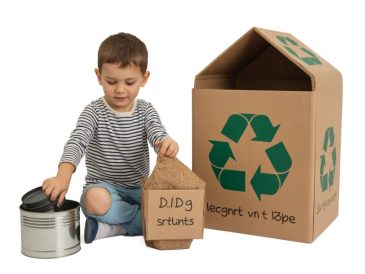
- Composting scraps together: Let children tip vegetable peelings into the compost bin and watch the magic of decomposition unfold over weeks.
- Litter-picking walks: Grab a pair of gloves and a reusable bag, and turn your local park or street into a mini mission. Kids love the sense of purpose.
- « Fix it before you ditch it » sessions: Mending a torn coat or gluing a broken toy teaches resourcefulness and reduces waste in one fell swoop.
- Reusable swaps made visible: Let children choose the cloth bag at the supermarket or refill the water bottle themselves — ownership sparks pride.
- Morning nature moments: Open a window, identify a birdsong, or press a leaf into a journal. Let nature punctuate the start of the day.
Make eco-choices transparent and conversational
Children are razor-sharp observers. They notice when you choose to walk instead of drive, when you rinse out a jar for reuse, or when you forget and grab a plastic bag anyway. Both moments matter. Narrating your choices — « I’m choosing this because… » — turns everyday decisions into gentle lessons without a single lecture.
Equally important: let them see you make mistakes with grace. Eco-living is not about perfection. Modelling self-compassion alongside sustainability teaches children that doing their best is always enough.
Connect Children to Nature — Beyond the Screen
We protect what we love, and we love what we truly know. For children to grow into environmental stewards, they need to feel nature as something familiar and alive — not a backdrop on a wildlife documentary, but a world they’ve touched, smelled, and marvelled at firsthand.
Get outside, whatever the weather
Muddy wellies, bug hunts in the rain, cloud-watching on the grass — these experiences build a relationship with the natural world that no screen can replicate. Studies show that children who spend regular time outdoors display greater empathy, lower stress levels, and stronger environmental awareness. Even 20 minutes a day in a local green space makes a measurable difference.
If you live in an urban environment, green is still findable: a window box of herbs, a visit to the nearest park, feeding ducks by a canal. Every encounter counts.
Let curiosity lead the way
Children are relentlessly curious — « Why does the worm come out when it rains? » and « What happens to the water after it goes down the drain? » are golden opportunities. Instead of brushing these questions aside, lean into them. Look up answers together. Visit a recycling centre, a wildlife sanctuary, or a community garden. Watch a nature documentary as a shared family experience.
When curiosity is nurtured consistently, it becomes a lifelong compass — one that points children towards solutions we haven’t yet imagined.
Keep the Conversation Hopeful and Age-Appropriate
One of the most common pitfalls well-meaning parents face is accidentally overwhelming children with the enormity of environmental challenges. Climate anxiety is a real and growing concern among young people — a 2021 global study found that 59% of children aged 16–25 felt « very worried » or « extremely worried » about climate change.
The antidote is not silence, but hope. Discuss environmental issues honestly and then pivot quickly to action and possibility. Lead with stories of change: communities switching to clean energy, species pulled back from the brink of extinction, forests restored by people who refused to give up.
Practical ways to frame eco-conversations
- Answer « why » questions with gentle truth: « Some fish get sick from plastic because they mistake it for food — and that’s why we try to use less of it. »
- Follow difficult facts with empowering questions: « What could we do differently this week? »
- Celebrate environmental wins in the news, not just problems.
- Read books together that centre hope and agency — more on this below.
Use Books and Stories to Build Environmental Empathy
Stories are one of the most effective tools for shaping a child’s worldview. When a child falls in love with a character — even a whale, a forest, or a lonely polar bear — they develop empathy that transfers to the real world. A few firm family favourites worth adding to your shelf:
- The Lorax by Dr. Seuss — A timeless, witty call to speak up for trees and those who cannot speak for themselves.
- Somebody Swallowed Stanley by Sarah Roberts — A tender, funny tale about ocean pollution told through the eyes of a jellyfish-shaped bag.
- The Last Tree by Emily Haworth-Booth — A quietly powerful reflection on community, choices, and consequences.
- Greta and the Giants by Zoë Tucker — Inspired by Greta Thunberg, this picture book shows children that even one small voice can spark big change.
Empower Children with Real Responsibility
Children thrive when they feel genuinely capable. Rather than simply telling them why the planet matters, give them meaningful roles within your family’s eco-efforts. Consider:
- Assigning them a weekly « eco mission » — switching off lights in unused rooms, choosing a zero-waste snack for school, or designing a toy from recycled cardboard.
- Letting them lead in the garden: choosing which seeds to plant, watering schedules, harvesting.
- Involving them in shopping decisions: picking loose vegetables over plastic-wrapped ones, selecting the recycled toilet paper brand.
Responsibility, when offered with warmth rather than pressure, builds intrinsic motivation. The goal is for environmental care to feel like something they want to do — not a rule imposed from above.
Celebrate Progress Without Pressure
Eco-overload is real, and it can backfire spectacularly with children. Striving for a perfect, guilt-free household can transform sustainability from something joyful into something stressful. Instead, notice and celebrate the small wins enthusiastically and often.
« I love that you remembered your reusable bottle today. » « You chose the no-packaging snack — brilliant thinking. » These affirmations do far more for long-term behaviour than any amount of correction.
And when things go sideways — when a plastic-wrapped treat creeps in or the recycling ends up in the wrong bin — meet it with curiosity rather than criticism. Guilt doesn’t grow kindness, but understanding absolutely does.
Extend the Village: Community and Shared Action
Eco-education is most powerful when it extends beyond the family unit. When children see that their values are shared by a wider community, their sense of agency grows exponentially. Look for opportunities to participate together:
- Join a community garden or urban growing project.
- Attend a local beach or woodland clean-up event.
- Visit a sustainable living fair or eco-friendly market.
- Connect with other eco-minded families through local groups or online communities like Terra Family.
These shared experiences teach children that environmental action is a collective endeavour — and that it can be joyful, social, and even a little bit adventurous.
Learning how to raise environmentally conscious children is less about doing everything right and more about doing something meaningful, consistently. It’s in the jam jars rinsed for reuse, the muddy knees after a bug hunt, the bedtime stories about brave little forests. Every small act is a thread in a bigger story — one where your child grows up not just believing they can care for the Earth, but knowing, without a shadow of a doubt, that they already do.