Why Choose Eco-Conscious Camping with Kids?
There’s something quietly magical about waking up to birdsong, with dewy grass underfoot and tiny fingers reaching for hot chocolate in enamel mugs. Camping with children isn’t just a family adventure—it’s a doorway into slowing down, reconnecting with one another, and discovering the natural world hand in hand.
But as we pack up our cars and head to beautiful places, it’s worth asking: how can we explore without leaving behind a trace? Eco-conscious camping offers more than just a way to enjoy the outdoors—it gently teaches our children how to love and respect the planet we share. And honestly, it feels good knowing the stars we gaze at tonight will shine just as brightly for their children tomorrow.
Choosing the Right Campsite
Not all campsites are created equal. If you’re dreaming of a more sustainable adventure, consider seeking out:
- Eco-certified campsites: Look for labels like Green Key or EcoCamp to ensure sustainable practices are in place (think composting toilets, solar energy, and recycling stations).
- Off-grid or low-impact sites: These quieter spots, often family-run, minimize infrastructure and immerse you in the rhythms of nature.
- Proximity to home: Less time on the road = lower carbon footprint and happier little campers.
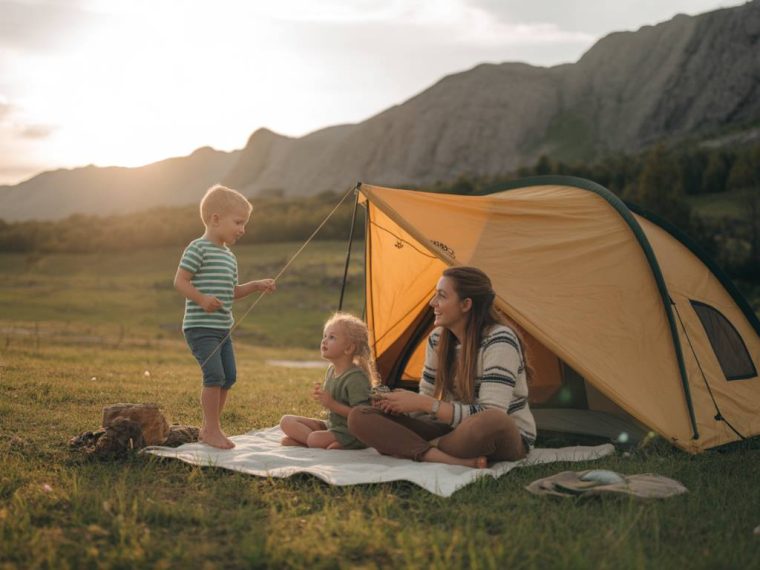
We stayed at a lovely organic farm in Devon last summer—tents nestled in wildflower meadows and eggs collected each morning by chubby toddler hands. Smiles (and muddy boots) all around.
Eco-Friendly Gear Essentials
Before you rush to buy a matching set of bamboo-fiber cutlery and solar lanterns, pause. Sustainable camping starts with what you already have. That said, when you do need to invest, choose quality gear built to last, ideally made from eco-responsible materials.
- Tents: Opt for durable, repairable, and PVC-free models. Brands like Vaude and Big Agnes are often praised for their greener practices.
- Sleeping gear: Go for recycled filling in sleeping bags, and natural materials like wool or organic cotton for blankets.
- Reusable cookware and dishware: Enamel or stainless steel sets are perfect—durable, easy to clean, and gentle on the planet.
- Reusable water bottles: Every family member gets one. It’s a small thing, but these choices stack up to real change.
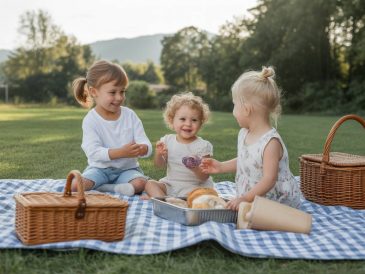
Oh, and don’t forget a sturdy picnic blanket. Ours is hand-me-down wool with a stubborn stain that whispers, “remember the blackberry crumble of 2019?”
Pack Light, Pack Thoughtfully
It’s tempting to overpack « just in case », especially with kids in tow. But children are resourceful, and nature is the best playground.
Lay out everything and ask yourself: do I really need this? Or can we make do (and maybe even have more fun) without it?
Some truly useful additions to your family’s eco-camping kit:
- Biodegradable soap and toothpaste: Kinder to the earth and gentle on little faces.
- Wet bags: Perfect for storing cloth nappies, muddy socks, or grape juice mishaps.
- Solar chargers: Keep your phone powered (mostly for pictures of muddy grins and stolen quiet moments, right?).
- Hand-crank flashlight: Bonus: kids love being in charge of light-making duties.
Remember, less fuss = more freedom. And freedom is where childhood really shines.
Embracing a Leave No Trace Ethos
Children are born empathic. Show them how to tread gently by making eco-responsibility part of the adventure, not an afterthought.
Practise Leave No Trace principles, and invite the little ones into the process:
- Respect wildlife: Observe, don’t disturb. Turn bird watching into a quiet morning ritual.
- Clean as you go: Carry small bags for litter collection—and turn it into a scavenger hunt.
- Stay on paths: Tea parties can be magical even among brambles and well-trodden roots.
- Campfire wisdom: If fires are allowed, keep them contained, use only fallen wood, and never leave them unsupervised.
One evening, my eldest set off with a tiny bucket to “rescue worms » from the footpath. I’m still not sure how many needed saving, but his heart was in it—and that’s what matters.
Meals Made Simple and Sustainable
Camping food doesn’t have to mean endless tins of beans. Keep it healthy, low-waste, and fun with minimal prep:
- Pre-chop veggies in reusable containers to make stir-fries lightning quick.
- Embrace one-pot meals: Lentil and veggie stew topped with torn sourdough is a family favourite.
- Choose seasonal, local ingredients wherever you camp.
- Zero-waste snacks: Whole fruits, homemade energy balls, roasted chickpeas.
We also let the kiddos choose a “special” treat to bring—a ritual that builds anticipation and keeps little hands invested in mealtime (even if it means chasing a rolling apple down the hill). And don’t forget a beeswax wrap or two for leftovers—waste not, want not.
Kid-Friendly Nature Activities
Half the joy of camping is finding stories hiding under every rock and beside every stream. Here are a few screen-free activity ideas to tuck up your sleeve:
- Nature scavenger hunts: Create a list together—something yellow, a funny-shaped stick, animal tracks.
- Bug hotels: Craft tiny homes using bark, leaves, and sticks. We once named ours “The Insect Inn.”
- Star-gazing storytelling: Weave tales from constellations. Every star becomes a hero or mischievous elf.
- Mud kitchen magic: Who needs toys when there’s mud pie to “bake” and flower soup to “stir”?
Your children might not remember their fifth trip to the zoo, but they will remember the night they laughed under a tent while raindrops drummed lullabies on its roof.
Creating a Gentle Evening Ritual
As the fire dwindles and the temperature dips ever so slightly, bring the day to a soft close. An eco-conscious camping evening can look like:
- Snuggling into sleeping bags with a storybook or a song (we bring a well-loved copy of Guess How Much I Love You).
- Reflecting on three “wow” moments from the day, even if one is just « I saw a frog! »
- Sipping chamomile tea from enamel mugs while watching the stars wink above.
There’s a hush that falls over campsites at dusk. And in that stillness, we relearn something our busy homes often forget—how simple it is to just be, together.
The Gentle Impact of Green Adventures
Camping with our little ones is more than an outdoor activity—it’s an invitation. An invitation to slow down, to step outside the “shoulds” and “musts” of everyday life, and to weave new traditions that marry joy with responsibility.
By choosing eco-conscious camping, we’re offering our children a cathedral of stars instead of screens, the scent of pine instead of plastic, and time. Honest-to-goodness time with us. Dirty fingernails, sticky cheeks, unanswered questions about worms and wind and wonder—that’s the real souvenir.
And if we nurture that love and tenderness toward nature today, maybe—just maybe—it’ll bloom for generations. One tent peg at a time.