There’s something timelessly magical about a family picnic—the warm thrum of bees in the tall grass, tiny fingers stealing raspberries from the bowl, and toes wiggling freely on a blanket that feels more like home than any table could. But as much as these alfresco moments fill our hearts, they can also fill the planet with plastic. Straws, cling film, packets upon packets of things we could so easily do without. But don’t worry, dear reader—just like any small hand can plant a seed, any small swap can make a difference. Here’s how to plan a plastic-free picnic that celebrates both our little ones and the Earth they’ll inherit.
Start with a Thoughtful Mindset
Before we even step into our kitchens, let’s pause. Planning a plastic-free picnic isn’t about achieving eco-perfection. It’s about mindful choices—those simple ‘better thans’ that add up to real change. It’s okay if not everything is zero waste. Start where you are, with what you have. Grace is far more sustainable than guilt, especially when small humans are involved.
Ask yourself: What do we truly need for this picnic? Can we use what we already own? This little mental inventory is like a deep breath before the dance—it grounds us and sets the rhythm.
Swap Disposables for Reusables
First up: the gear. A beautiful, clutter-free picnic begins with what you don’t bring. Swap single-use plastics for items that can be used again and again:
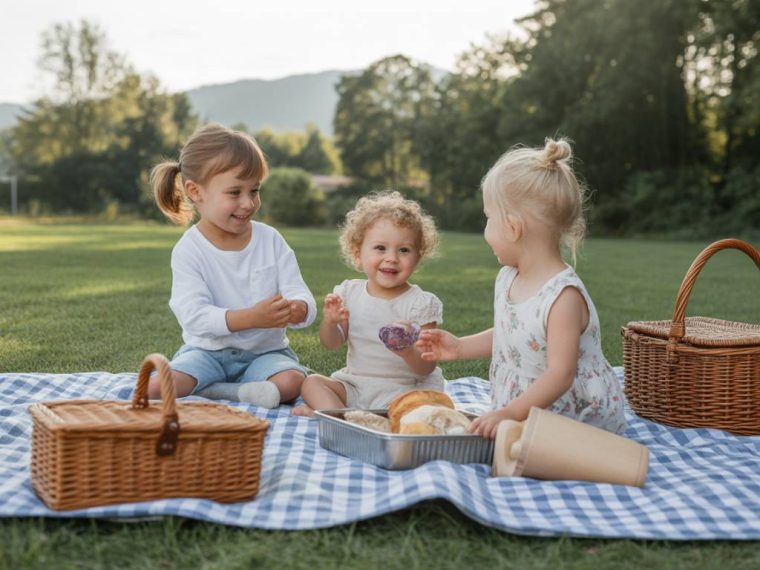
- Blankets and baskets: A cozy old quilt and a woven basket (even a tote bag will do) exude charm and eliminate the need for plastic bags.
- Reusable containers: Glass jars, stainless steel lunchboxes, or beeswax wraps are perfect for keeping food fresh without a hint of plastic.
- Cutlery and crockery: Rather than flimsy disposable options, bring your regular metal cutlery, bamboo alternatives, or children’s silicone plates.
- Cloth napkins: Softer on both the skin and the planet, these are also easier for sticky-fingered toddlers to handle.
- Water bottles and flasks: Refill them before you leave – no need for those tiny plastic water bottles ever again.
We’ve made it a little ritual now, letting the children “pack” the picnic with their favourite reusable containers. It’s not always efficient, but oh how they beam with importance.
Plan a Menu That Loves the Earth
Picnic food is where the joy begins—and fortunately, some of the yummiest treats are also the simplest. With some planning, your picnic can be delicious, child-friendly, and plastic-free.
Here are some ideas that never fail us:
- Fruit on stalks or in skins: Apples, bananas, strawberries, grapes—ready-wrapped by nature.
- Homemade muffins or scones: Baked at home and tucked into beeswax wraps or linen cloths, they travel well and taste like love.
- Hummus and veggie sticks: Chop up carrots, cucumbers and peppers, popped into glass jars. They’re colourful, crunchy, and perfect for scooping.
- Mini sandwiches or wraps: Choose bread from a local bakery in a paper bag, and fill with things like cheese, greens, or nut butter (depending on allergies, of course!).
- Pasta salads: These can be made the night before and scooped from jars or tins—hearty and nourishing.
A little thermos of iced herbal tea or a carafe of infused water (we like cucumber and mint) completes the picture—and you can avoid cartons or juice boxes altogether.
Get the Little Ones Involved
Picnics are as much about the journey as they are about the spread. Letting your children be part of the planning or preparation helps foster a love of outdoor eating and caretaking the Earth. You could ask:
- Which snacks should we bring?
- Can you help pack your lunchbox?
- Shall we find leaves or flowers for the tablecloth once we arrive?
One sunny Thursday, my daughter tucked a handful of daisies into a napkin and declared it our « picnic centrepiece »—and just like that, our lunch was a banquet. Involving children empowers them, and teaches environmental care through gentle example rather than lectures.
Think Beyond Food: Activities Without Waste
While the food might be the star of the experience, lower-waste entertainment keeps little ones happy and engaged long after the crumbs are gone. Here are a few eco-friendly ideas to add some extra magic to your afternoon:
- Nature scavenger hunt: Create a simple list—“something fuzzy, something yellow, something that makes a funny sound.” Joy guaranteed.
- Story time under the trees: Pack a favourite picture book or two. Reading outside brings a new wonder to well-loved tales.
- Outdoor games: Handmade kites, skipping ropes, or good old-fashioned hide-and-seek.
- Journaling or drawing: Bring a sketchbook to collect pressed leaves, doodles, or words about the day. These become treasured keepsakes.
We once used leftover chalk to draw a “picnic menu” on a nearby stone—my son has never felt so professional in his role as lunch waiter.
Leave No Trace—Tiny Feet, Big Responsibility
By the end of a day outdoors, everyone’s a delightful mess. But even in that fluffy, grass-stained chaos, it’s important to tidy up gently and thoroughly. Pack a cloth bag just for compostables, and another for recyclables. Double-check your space for rogue grape stems or reusable rogue cutlery (ask me how many teaspoons I’ve lost to the wild!).
Make it a little game—“Let’s be nature’s helpers and find every little bit we brought.” Children tune in easily, and turning clean-up into a shared ritual helps cement the habit in their minds and hearts.
Extra Tips for Plastic-Free Picnic Success
- Prep in Advance: Chopping and storing food the night before saves stress and single-use wrappers the next day.
- Skip store-bought snacks: Or at least look for options in compostable or recyclable packaging.
- Layer clothing: To avoid bringing extra plastic bags for spills or changes. Lightweight cotton does the trick.
- Pins and clips: Clothespins or pretty hair clips are great for securing cloth napkins or picnic blankets in a pinch (especially on breezier days).
- Bring a mini bin bag: One for compostables and one for anything that sneaks in and needs to be brought home—for sorting later.
Creating Memories That Last—Not Waste That Does
So much of parenting feels like a sprint—but a picnic is a chance to meander. To watch as juice dribbles down chins and ants (inevitably) steal a crumb or two. To lay still, side by side, and stare at the clouds that don’t mind if we linger longer than planned.
Making it plastic-free doesn’t ask extra of us; it simply invites us deeper into the moment. It connects the joy of what’s on the blanket to the earth beneath it. And ultimately, isn’t that what we want to teach our children? That living gently with the planet enhances the beauty of each shared bite, sticky hug, and soft sunset?
Next time you head out, wrap your strawberries in cloth, bring the beloved cup with the dented rim, and let your picnic be a love letter—to your family and the world they’re growing into.
Because the future, dear friend, is woven from afternoons just like these.