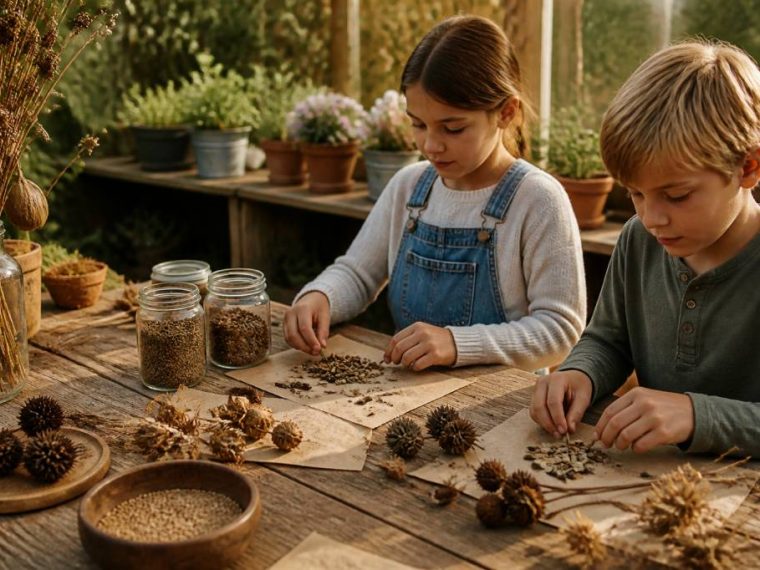
Seed saving is one of those simple family habits that can quietly change the way a garden feels and functions. Instead of treating each growing season as a fresh start, you begin building a living cycle: plants feed your family, your family saves the best seeds, and those seeds help create next year’s garden. Over time, this routine can make a household more connected to nature, more confident in growing food, and more resilient when weather, prices, or supply chains become unpredictable.
For families who are new to gardening, seed saving can sound technical or even intimidating. In reality, it can begin with just a few easy crops and a basic system that everyone in the household understands. Children can help identify mature seeds, label envelopes, and store jars. Adults can handle the more careful sorting and planning. The goal is not perfection. The goal is consistency, curiosity, and building a garden that becomes stronger with each season.
Why seed saving matters for families
Seed saving offers more than free seeds. It helps families participate in the full life cycle of the plants they grow. That experience can be educational for children and deeply satisfying for adults. When you save seeds from a tomato plant that thrived in your particular backyard, you are preserving traits that worked well in your microclimate. Over time, this can lead to vegetables and flowers that are better adapted to your soil, your rainfall patterns, and your family’s growing habits.
A family seed-saving routine also supports resilience. If seed prices rise or certain varieties become unavailable, your household still has a source of familiar plants. If you save from the strongest, healthiest plants each year, you are selecting for hardiness. You are also reducing dependence on last-minute store purchases and making your garden more self-reliant.
There is also a financial benefit. While seed packets are usually affordable, the cost adds up over time, especially for gardeners who plant a lot of crops. Saving seeds from open-pollinated varieties can reduce that expense. More importantly, it creates a sense of abundance. Instead of viewing seeds as a one-time purchase, families begin to see them as part of a renewable system.
Start with the right plants
Not every plant is suitable for beginner seed savers. The easiest place to begin is with open-pollinated varieties, because they produce offspring that are more likely to resemble the parent plant. Hybrid varieties may grow well, but their seeds often do not produce consistent results. If a seed packet says “F1 hybrid,” it is usually better for cooking or eating than for saving.
Good starter crops for family seed saving include:
These plants are relatively approachable because their seeds are easy to collect, clean, and dry. Tomatoes and peppers need a little more care, but they are still manageable for a family project. Beans and peas are especially straightforward because the seeds are already visible in their pods. Flowers such as marigolds can help children practice the basics without the pressure of relying on a food crop first.
It helps to choose only a few varieties in the beginning. A family does not need to save everything at once. In fact, starting small makes the process more enjoyable and reduces mistakes. A few well-saved seed types are far more useful than a large collection that was gathered carelessly.
Create a family seed-saving system
A routine works best when it is simple and repeatable. Choose one place in the home where seed-saving supplies live. This might be a kitchen drawer, a pantry shelf, or a small box in the mudroom. Keep envelopes, paper bags, labels, a marker, and a notebook or phone note nearby. When the whole family knows where the seed materials are kept, the process becomes easier to remember and maintain.
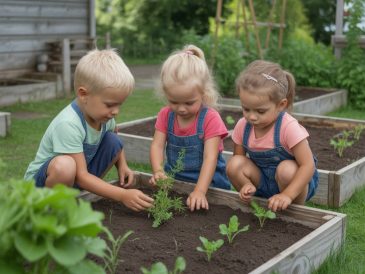
It can help to assign age-appropriate roles. Young children might collect pods or help shake dried seeds into bowls. Older children can help sort, label, and package. Adults can decide which plants are healthiest, when seeds are mature, and how long they need to dry. Giving each person a role turns seed saving into a shared ritual rather than another gardening task for one person alone.
A family notebook or spreadsheet can also make a big difference. Record the variety name, where it was planted, whether the plant did well, and any special observations. For example, you might note that a certain bean produced heavily despite a hot summer, or that a tomato variety tasted especially good and resisted disease. These notes become valuable from year to year.
Know when seeds are ready
One of the most important parts of seed saving is harvesting seeds at the right stage. Seeds must be mature before they can be stored successfully. If they are collected too early, they may not germinate well later. If they are left too long in wet weather, they may rot or sprout on the plant.
For dry-seeded crops like beans, peas, and lettuce, the seed heads or pods should be fully dry on the plant whenever possible. The pods may turn brown, papery, or brittle. For tomatoes and peppers, the fruit is harvested when ripe, and the seeds are removed from inside. Many flower seeds are ready when the bloom fades and the seed head becomes dry and brown.
Families can use a simple rule: if the plant is still green and juicy, it may not be ready. If it is dry, brown, and mature, it may be worth collecting. This is a helpful teaching moment for children, who often enjoy comparing the stages of growth and learning how plants signal readiness in different ways.
Clean and dry seeds properly
Once seeds are harvested, they need to be cleaned and dried before storage. Dry seeds from beans and peas are usually easy to handle. Remove any pod pieces or debris, then spread the seeds on a paper plate, screen, or tray in a dry indoor location for about a week or two. Make sure they are not piled up, because airflow matters.
Wet-seeded crops such as tomatoes require more attention. Tomato seeds are often removed from the fruit and rinsed. Some gardeners ferment tomato seeds briefly to help separate them from the gel coating, though a careful rinse and drying process is also used by many home gardeners. Pepper seeds can be removed, cleaned of pulp, and dried on a plate or coffee filter.
It is important that seeds are thoroughly dry before storage. Any lingering moisture can lead to mold or spoilage. A good test is to bend or press a seed gently. If it feels soft or flexible when it should be firm, give it more time. Proper drying is one of the biggest keys to successful seed saving.
Label everything clearly
Seed envelopes and containers should always be labeled. It is surprisingly easy to forget which bean came from which plant or which lettuce was the most productive. A label should include the plant name, variety, harvest date, and any helpful notes, such as “best flavor,” “thrived in shade,” or “saved from healthiest plant.”
This step may seem small, but it protects the value of the entire routine. Families often grow in different areas of the yard, change garden beds, or save seeds over several years. Clear labels make it possible to track what worked and what did not. They also help children feel ownership over the process because they can see their work organized and preserved.
Store seeds in a cool, dry place
Good storage conditions help seeds stay viable longer. In general, seeds prefer cool, dry, and dark spaces. A cupboard away from the stove, a sealed container in a closet, or a dedicated box in a dry basement can work well. Avoid areas with temperature swings or humidity, such as above the refrigerator or near a sink.
Paper envelopes are useful for short-term storage because they let seeds breathe. For longer storage, envelopes can be kept inside a sealed jar or airtight container with a small packet of desiccant if needed. Just make sure the seeds are dry first. Moisture is the enemy of stored seeds.
Families may enjoy creating a “seed library” box together, organized by crop type or planting season. This can turn the garden into a year-round household project rather than something remembered only in spring. It also helps children see the practical side of patience and planning.
Make it part of the family rhythm
Seed saving works best when it becomes a habit tied to the garden calendar. For example, one weekend in late summer could be designated as seed-saving day. Another evening in autumn could be reserved for labeling and sorting. In winter, the family might review last season’s notes and choose what to grow again.
Simple traditions can make the routine more meaningful:
These habits help children understand that gardening is not only about planting and picking. It is also about observing, remembering, selecting, and preparing for the future. That lesson can stay with them far beyond the garden.
Keep learning as you go
Every family seed-saving routine improves with experience. Some seeds store longer than others. Some plants cross-pollinate easily and require more care. Some seasons are ideal for seed collection, while others are too wet or too short. The best approach is to start with a manageable number of crops and learn from each attempt.
Families interested in expanding their skills can explore simple seed-saving guides, regional gardening groups, or local libraries. There are also practical tools that may be worth purchasing, such as seed envelopes, waterproof labels, drying screens, or a small storage box. These items are not essential, but they can make the process easier and more organized.
Over time, the garden becomes a place of memory as well as growth. A packet of saved beans might remind you of a hot summer when the plants still produced beautifully. A set of marigold seeds might bring back a child’s excitement at watching the flower heads dry. A saved tomato variety may become “your family’s tomato” because it has been grown and selected over several seasons.
That is the quiet strength of seed saving. It teaches families to pay attention, to protect what works, and to trust that small, repeated actions can create a more resilient garden. With a few envelopes, some careful observation, and a little teamwork, any household can begin building a seed-saving routine that supports both the garden and the family around it.